Elf: Difference between revisions
More actions
Pogsothoth (talk | contribs) |
Pogsothoth (talk | contribs) |
||
| (3 intermediate revisions by the same user not shown) | |||
| Line 16: | Line 16: | ||
The elves of [[Elfheim]] constituted the largest population of elves anywhere on [[The Earth (Kritarchy)|Earth]]. They were split between the four castes of hunter-gatherers, craftselves, shephereds and gentry. Their society was governed by the high houses each descended from one of [[The Antecedents]]. | The elves of [[Elfheim]] constituted the largest population of elves anywhere on [[The Earth (Kritarchy)|Earth]]. They were split between the four castes of hunter-gatherers, craftselves, shephereds and gentry. Their society was governed by the high houses each descended from one of [[The Antecedents]]. | ||
Unlike most other cultures | Unlike most other civilized cultures elves did not value permanent development over nature. They did not fell trees to make shelters, till soil for sowing or shatter rock to erect monuments. As such, come the harsh seasons many elves simply perished due to sheer temperatures and famine. The elves did not consider this particularly odd or tragic. Even for an immortal species death was seen as just another chapter in the grand ineffable plan of the gods. | ||
The elf Castrums were among the only inhabited elfin structures, built by a mysterious culture who was believed to have existed at the dawn of history. | The monumental elf Castrums were among the only inhabited elfin structures, built by a mysterious culture who was believed to have existed at the dawn of history. | ||
=== Immortality === | === Immortality === | ||
Elves did not grow old or diminish in strength as a result of their long lifespans. What came after death was of little concern to most elves as opposed to other cultures where most individuals strive to carry on their legacy across generations. Elves | Elves did not grow old or diminish in strength as a result of their long lifespans. What came after death was of little concern to most elves as opposed to other cultures where most individuals strive to carry on their legacy across generations. Elves rather concern themselves more with how to properly to live than how to die. The eldest elves are some of the only ones who know exactly how much of the world has been lost to [[the Snarl]] and as such feel great unease at its implications for the future of the Earth. | ||
=== Notable elves === | === Notable elves === | ||
Latest revision as of 21:13, 20 July 2026
Enu
editElves on Enu lived on the continent of Raun'shesh and The Kingdom of Tel'arn.
Notable Elves
edit- Tirith Richlyth, king of Tel'arn.
- Leathanny Richlyth, erstwhile queen of Tel'arn and a powerful warlord.
- Merlah Nharaigh, lady of Vandor Gis and a lead protector of Uskeshandor.
Kritarchy
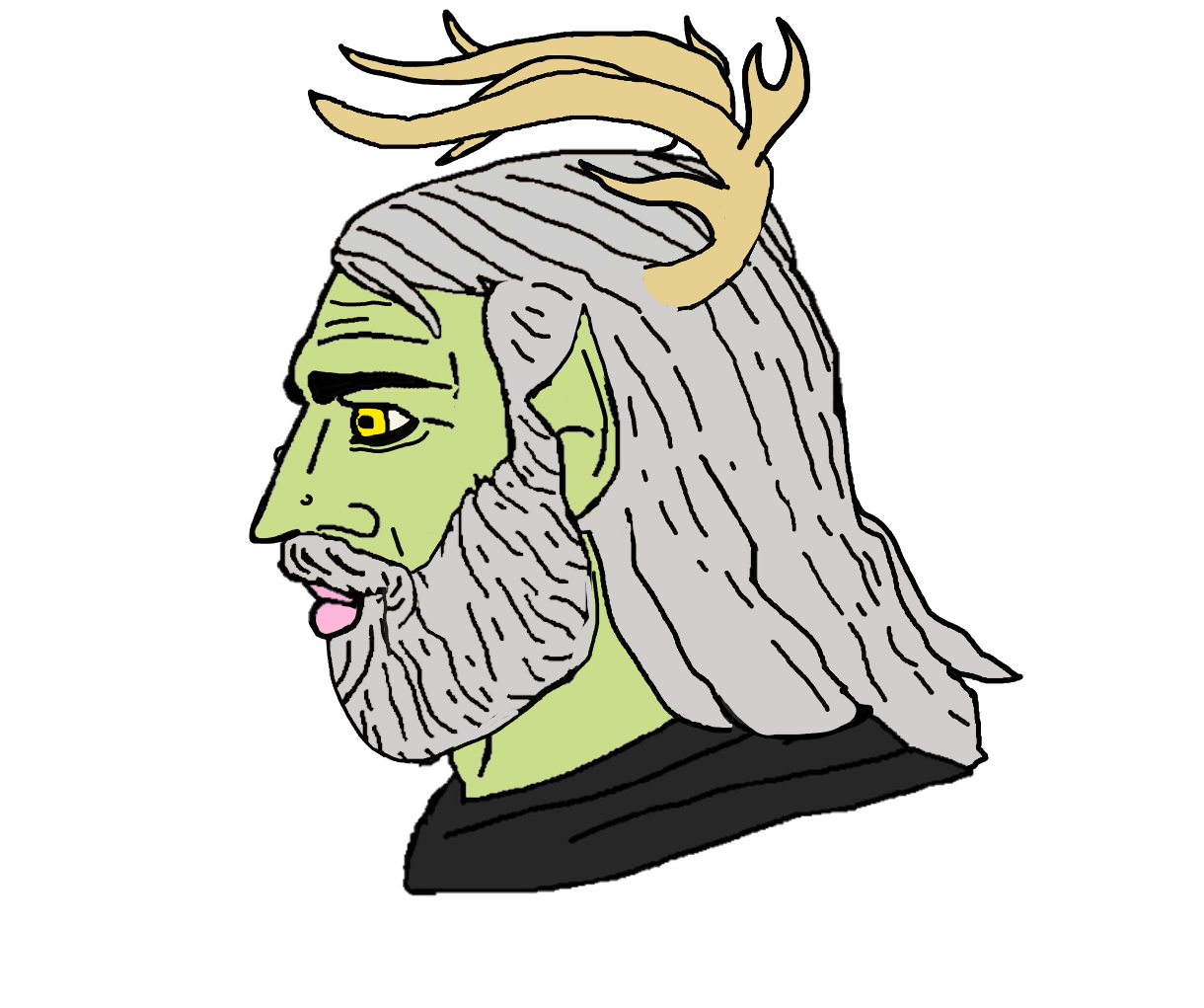
editElves were a culture of reclusive immortals in The Lands of the Highpriest. They shared an ancestry and animosity with the mortal Svartalfr.
Culture
editThe elves of Elfheim constituted the largest population of elves anywhere on Earth. They were split between the four castes of hunter-gatherers, craftselves, shephereds and gentry. Their society was governed by the high houses each descended from one of The Antecedents.
Unlike most other civilized cultures elves did not value permanent development over nature. They did not fell trees to make shelters, till soil for sowing or shatter rock to erect monuments. As such, come the harsh seasons many elves simply perished due to sheer temperatures and famine. The elves did not consider this particularly odd or tragic. Even for an immortal species death was seen as just another chapter in the grand ineffable plan of the gods.
The monumental elf Castrums were among the only inhabited elfin structures, built by a mysterious culture who was believed to have existed at the dawn of history.
Immortality
editElves did not grow old or diminish in strength as a result of their long lifespans. What came after death was of little concern to most elves as opposed to other cultures where most individuals strive to carry on their legacy across generations. Elves rather concern themselves more with how to properly to live than how to die. The eldest elves are some of the only ones who know exactly how much of the world has been lost to the Snarl and as such feel great unease at its implications for the future of the Earth.
Notable elves
edit- Aillas the Good, former Grand Duke of Elfheim sometimes canonized as a saint.
Memmon
editThe planet Bellorona's underground was populated by the subterranean Cavern Elves. On the surface, elves could be found on the continent of Eweron
Strota
editElves were native to The Feyrealm, and were populous in the domains of Sanovia and Watun. They drew power from the Artifact of Elven Lives, which granted them elongated lifespans and halted their aging.
Eladrin
editEladrin were elves who had supernatural abilities and characteristics of the seasons.
Shadar-kai
editShadar-kai were pale elves who lived in the Shadowfell and worshiped the Crow Queen
Notable Elves
edit- Santovia Flora, part of The Colorful Five and overseer of Sanovia.
- Bismo Sandro, War General in the war for the Artifact of Elven Lives.